

Source
Bring the condition of equipment and spaces into view alongside the information your team already keeps about them. A reading gains a location, an owner and a history.
Make buildings intelligent, connected and actionable. twinSpace brings live conditions, spaces, assets and work into one clear view so teams can see what matters and move with confidence.
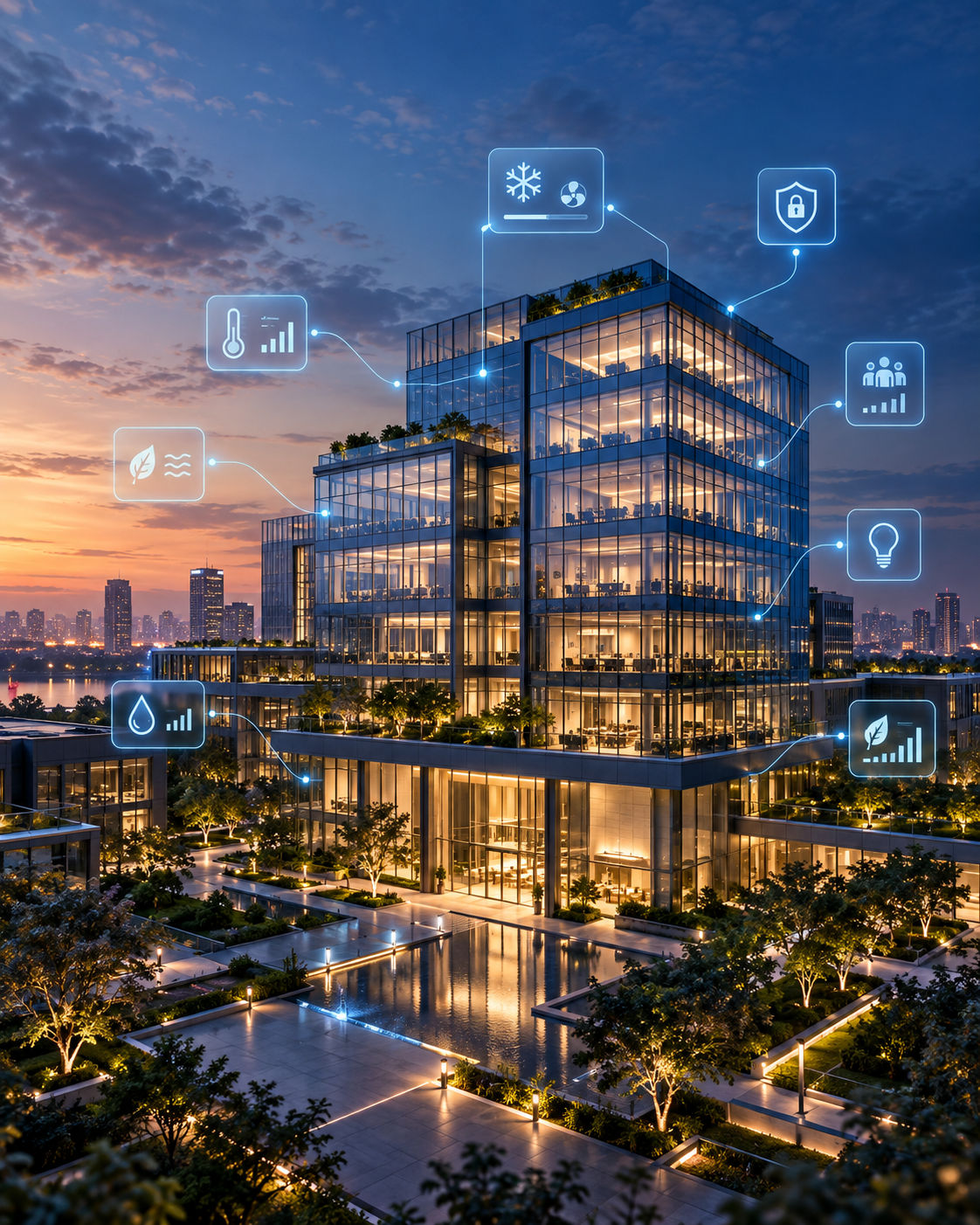
A building is more than a model, a reading or a maintenance log. Its systems influence each other, and every decision depends on knowing those relationships. AIoT connects what is happening in the physical world with the spaces, assets, records and people that give it meaning.
When a room grows uncomfortable, the answer may sit in equipment serving that zone, a changed schedule or a work order from last week. twinSpace is designed to put those clues together in one place.
Bring the condition of equipment and spaces into view alongside the information your team already keeps about them. A reading gains a location, an owner and a history.
Follow the connections between an event, the asset involved, the area it serves and the documents that explain it. Investigate the situation without piecing together separate screens.
Give the right person the evidence to choose a clear next step. Carry that decision from an initial question into coordinated work and a useful record afterward.
The digital twin connects a building's spaces, assets, model and records in one view. AIoT intelligence is designed to add live conditions to that context as site systems are connected.
Together, they help teams see what changed, understand what it affects and decide what to do next.
Explore the platformOnce physical signals, asset records and work are connected, the same foundation can support deeper operational decisions. Scope and availability depend on the data connected at each site.
Spot deterioration patterns early and focus service before equipment fails.
Bring unusual readings and behaviour into a clear, explainable review flow.
Relate consumption to occupancy, equipment and operating schedules.
See performance and risk across sites without losing asset-level detail.
Connect temperature, air quality and occupancy to the spaces people use.
Translate visual inspections and camera events into actionable site context.
Put work, history and evidence in the hands of the person at the asset.
Pair an alert with its likely cause, consequence and next best action.
Plan capacity, demand and maintenance around what is likely to happen.
Route evidence and routine decisions to the right team with human control.
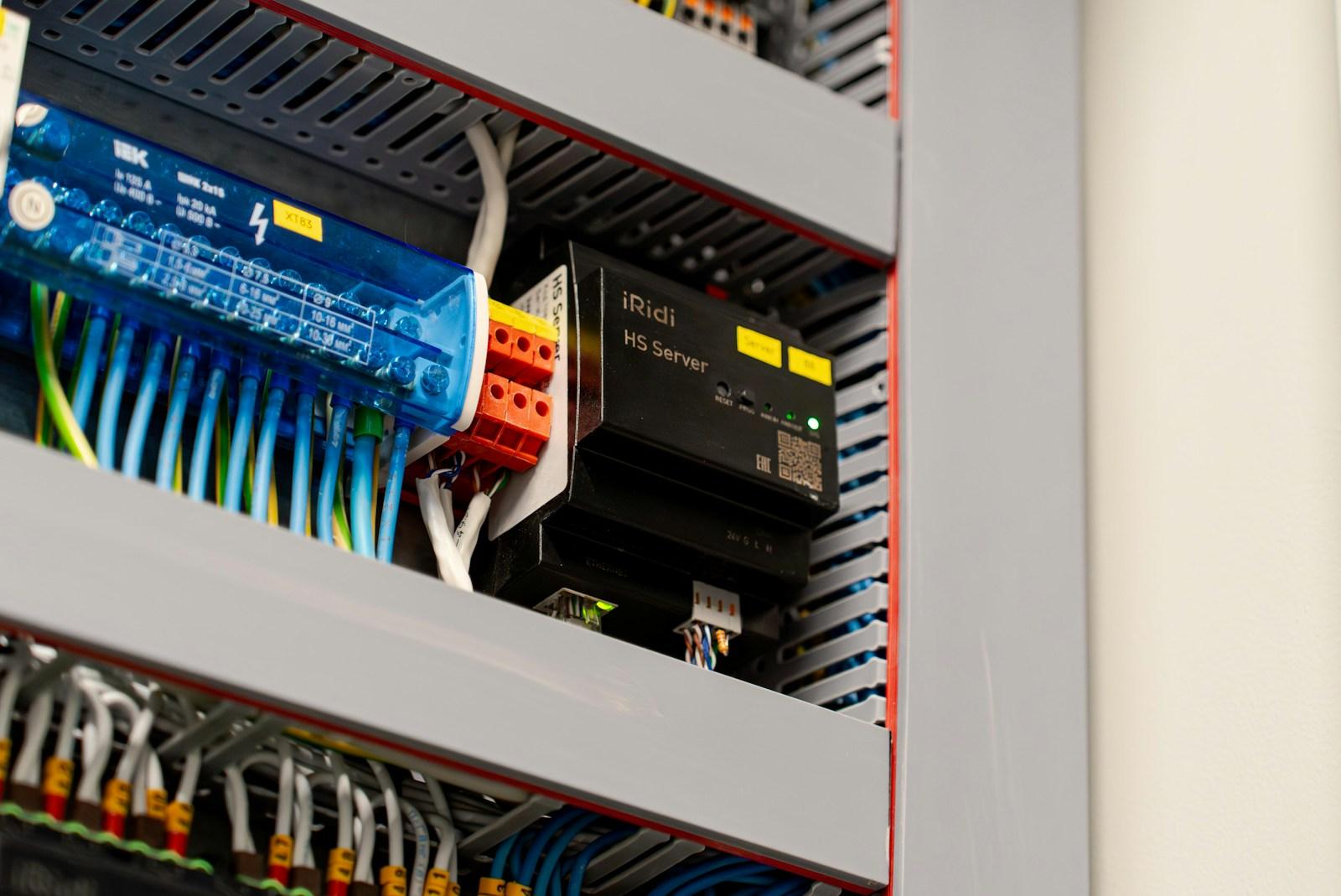
Behind the finished spaces are controls, air systems, meters and equipment working all day. Their signals tell only part of the story. A useful view also knows which floor is affected, what depends on the equipment and who can respond.
Illustrative building systems photography.
The digital twin gives spaces, assets and records a shared place. AIoT adds signals and events to that context when site systems are connected. The platform architecture shows how those layers work together.
Think of it as a path from a physical event to a decision: a device notices a change, the building record identifies what it affects, and a person sees the information needed to respond.
Explore the platformThe intelligence people can use
From observation to better decisions
Meaning behind every signal
The memory and pulse of the system
Where systems meet the site
The places and things that matter
A connected view gives each reading a place and a purpose. See what changed, which spaces and assets it affects, and the next decision that deserves attention.
Useful intelligence begins with a question that someone in the building already needs to answer.
See the room in context, find the equipment that serves it and review the information your team has about recent work or changes. The goal is a faster, better informed investigation.
Bring planned work, asset condition and open issues into one view. Prioritise the jobs that affect the most critical spaces and give technicians the detail they need at the asset.
Move from the model to a usable record of location, classification, documents and history. Preserve the context built during design and construction for the people operating the place.
Explore model information, find the evidence behind an answer and move work forward in the same operational environment.
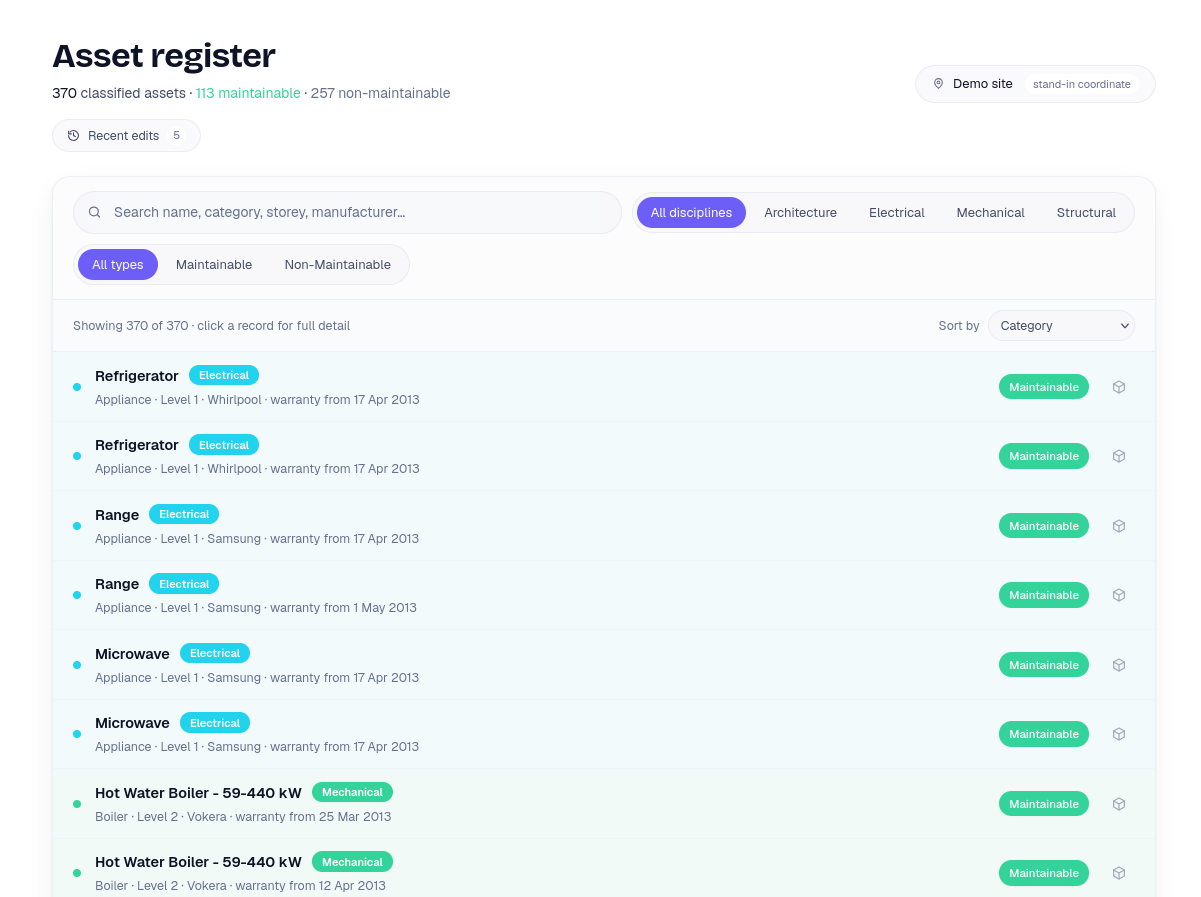
Browse the asset register by classification or location, follow equipment detail and keep edits with their history. Give everyone a shared reference for the same physical item.
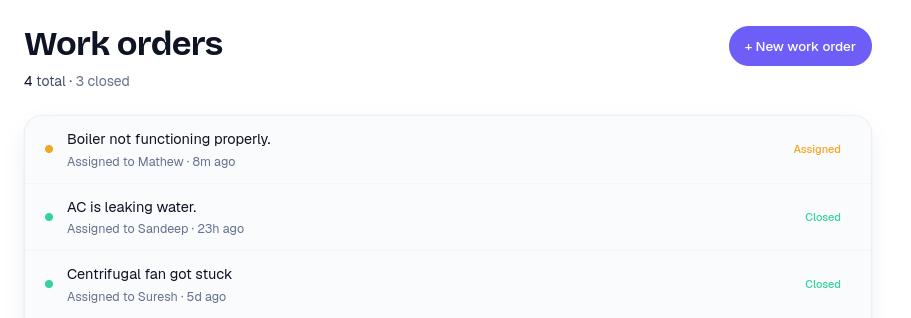
Assign work orders, track status and keep the building context attached to the job. Record the decision so the next shift knows what happened.
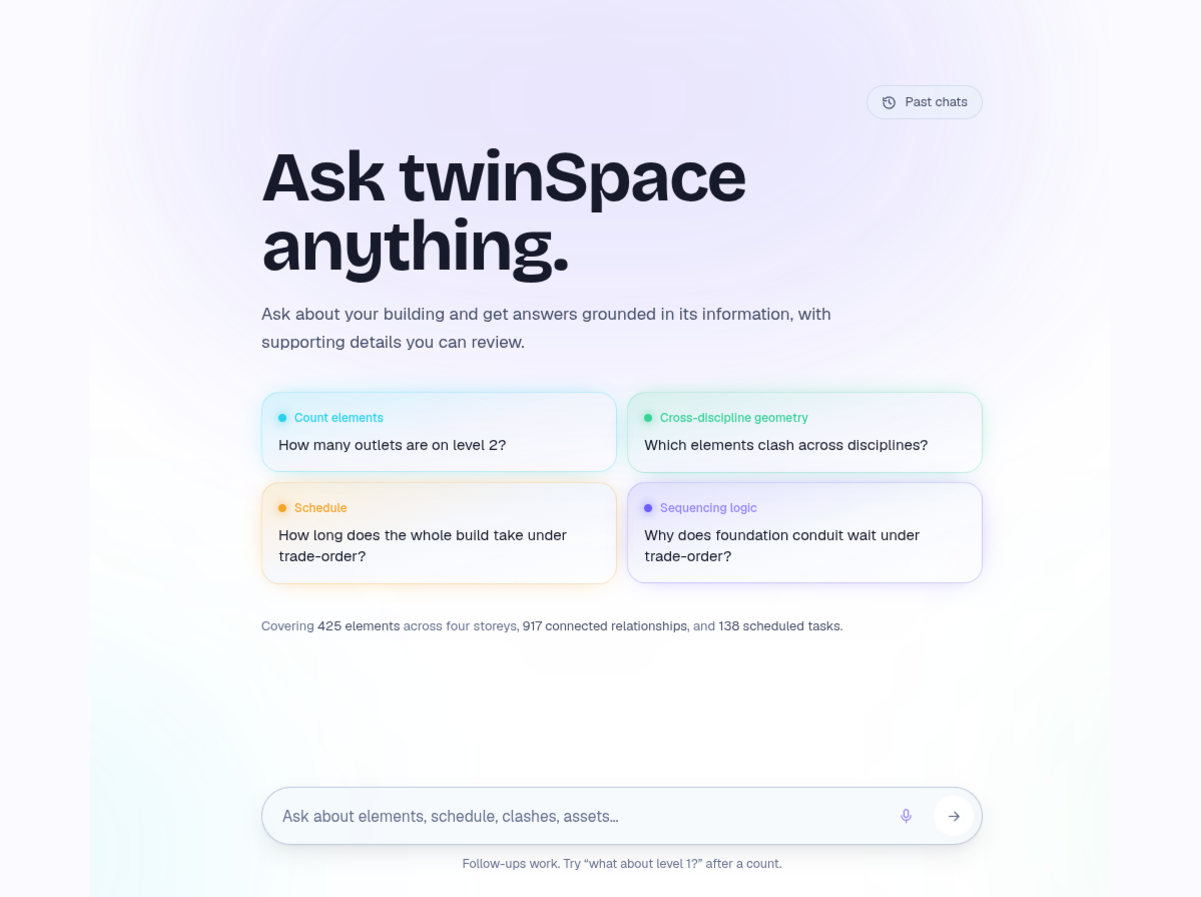
Here is AskTwin working with an example building. A simple question starts an investigation across the information connected to that place. The recording shows the current product interface; the answer for your site will reflect its own building information.
Start with an asset count, a maintenance question or a space you need to understand.
Move from the response into the relevant elements, records and supporting detail.
Use the answer to inspect an asset, coordinate an issue or plan the next task.
Start with the building information you already have. Give every asset, question and action a place in the same connected story.
Start a conversation